
17 Jun, 2026

Most content stops working within weeks of being published. Small businesses invest time and money into articles that spike briefly in traffic and then disappear. There is a better approach. Evergreen content, pages built around topics that stay relevant for months or years, keeps earning traffic long after the work is done. With search results increasingly crowded with AI-generated pages, the advantage now belongs to content that goes deeper, not just faster.
The principles behind good SEO have not changed: match what people are searching for, answer it well, and keep it current. Evergreen content is the strategy that makes that investment compound over time.
Table of Contents
- Why evergreen content pays off more than you think
- How to find topics that stay relevant for years
- How to keep evergreen content working over time
- The one mistake that kills evergreen content before it starts
- How rankingCoach supports your evergreen content strategy
- Frequently Asked Questions
Why evergreen content pays off more than you think
The math is straightforward. One article that brings 1,000 visitors a month for two years delivers the same value as 24 shorter-lived pieces. For small businesses with limited time and budget, that difference matters.
Trending content has its place, but it demands constant replenishment. As soon as the moment passes, the traffic drops. Evergreen content works the other way: it builds steadily, ranks consistently, and keeps delivering without requiring constant new investment. In a search environment where AI-generated content has made it easier than ever to publish but harder than ever to stand out, depth and staying power are more valuable than volume.
How to find topics that stay relevant for years
Not every topic has long-term appeal. The key is finding questions that people ask consistently, not just around a specific event or season. A cookware brand that ranks for "how to make pancakes" will see steady traffic year after year, because that question never goes away. A post about the hottest kitchen trend of the moment will not.
Keyword research tools are the right starting point. Search volume data shows you how often a term is searched each month, and trend data shows whether that interest is stable, growing, or declining. A topic with steady monthly search volume over several years is a strong candidate for evergreen content. A topic with a spike and a drop is not.
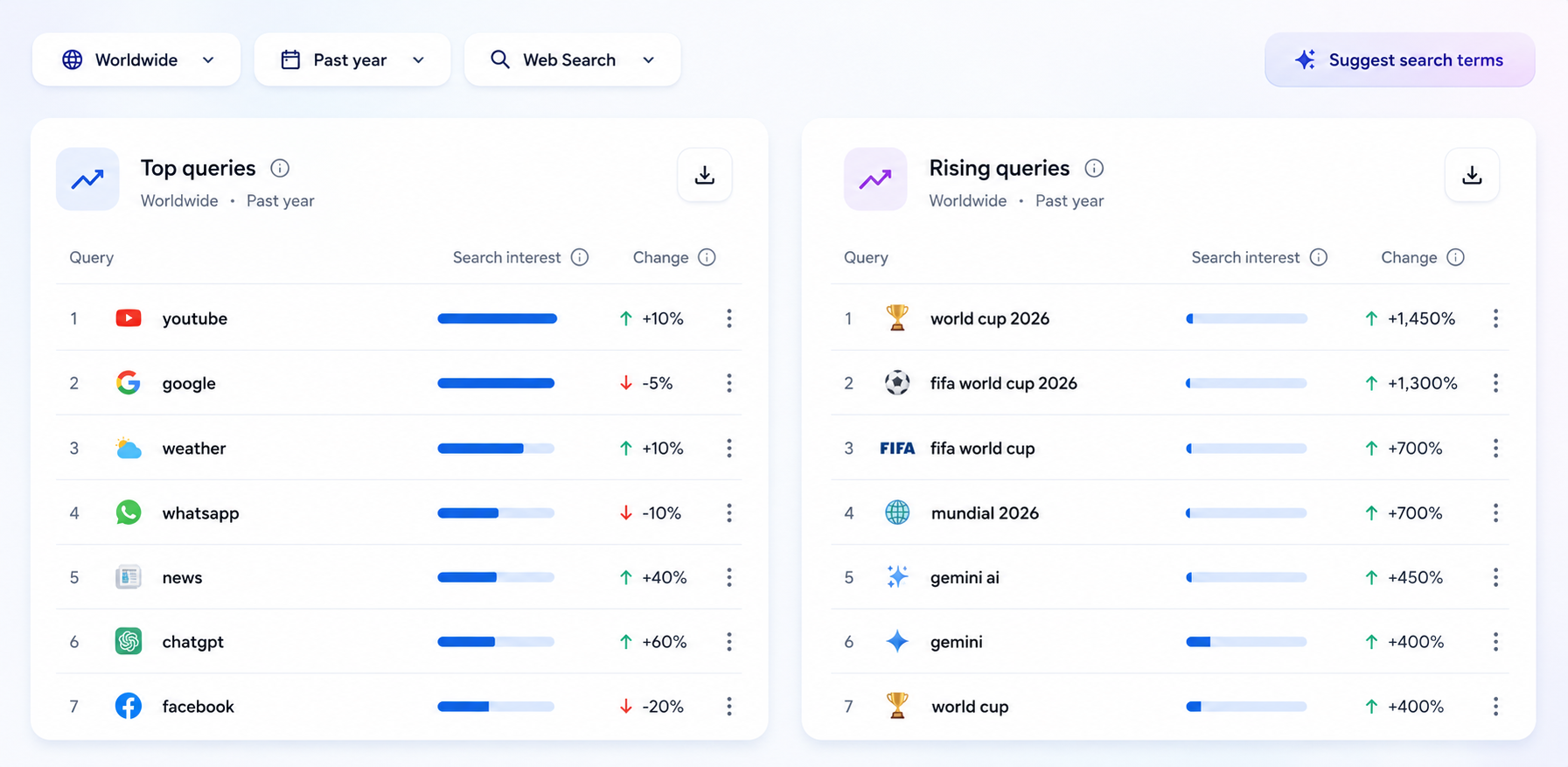
Google Trends is useful for spotting patterns, but it does not show concrete search numbers. Always combine it with a keyword tool that gives you actual volume data and an indication of how competitive a term is. For a small business, a lower-volume keyword that is easier to rank for can be more valuable than a high-volume one dominated by large sites.
How to keep evergreen content working over time
Some topics are genuinely timeless and need only minor tweaks to stay relevant. But many evergreen topics require occasional updates as the best answer evolves. The keyword "best smartphone" has been searched for over a decade, but the content that ranks for it today looks nothing like what ranked ten years ago.
The key is having a page structure that can be updated without losing its SEO history. That means keeping the same URL when you refresh the content. A page at /best-smartphones can be updated indefinitely. The existing rankings and inbound links are preserved, and Google treats it as a maintained, authoritative page rather than a new one starting from scratch.
When refreshing evergreen content, update:
- The body copy, especially any statistics, product names, or references that may have aged
- The meta title and meta description if they contain a year
- Any internal links that may have changed or broken
The one mistake that kills evergreen content before it starts
Putting a date in the URL. It seems harmless, but it permanently ties the page to a point in time. Google factors in the age, and the content loses its evergreen quality. A URL like /best-smartphones-2021 cannot be updated to reflect 2025 without either breaking the URL or setting up redirects. Either way, you lose SEO equity.
Many CMS platforms, including WordPress, generate date-based URLs for blog posts by default. Switch this setting off and use topic-based URLs instead. Dates in the meta title, meta description, and body text are fine and easy to update. In the URL, they are a permanent problem. Keep URLs clean, descriptive, and free of any reference to a specific time period.
How rankingCoach Supports Your Evergreen Content Strategy
rankingCoach gives SMBs the tools to build and maintain an evergreen content strategy without needing an agency. The AI Keyword Builder identifies search terms with consistent, long-term demand, so you start with topics that are worth the investment. The AI Content Optimizer helps you optimize each piece for the right keywords, covering on-page requirements step by step.
The AI Visibility feature shows how your business appears in AI-generated answers from tools like ChatGPT, Perplexity, and Gemini. Evergreen content that genuinely answers common questions is one of the strongest signals that helps AI models surface your business accurately, so the two work directly together.
Frequently Asked Questions
What is evergreen content in SEO?
Evergreen content is built around topics that stay relevant over time rather than trending or time-sensitive subjects. It continues to attract organic traffic long after it is published, making it a more efficient investment than content tied to a specific moment.
How do I know if a topic is evergreen?
Check Google Trends for a steady search pattern over several years, and use a keyword research tool to confirm consistent monthly search volume. A topic with stable demand and no seasonal spike is a strong evergreen candidate.
How often should I update evergreen content?
Review top-performing pages every 6 to 12 months. Update any outdated references, statistics, or examples, and refresh the meta title and description if they contain a year.
Can I put dates in evergreen content?
Dates in the body text and meta description are fine and easy to update later. Never put a date in the URL, as it signals to Google that the content is time-bound and cannot be changed without losing SEO equity.

